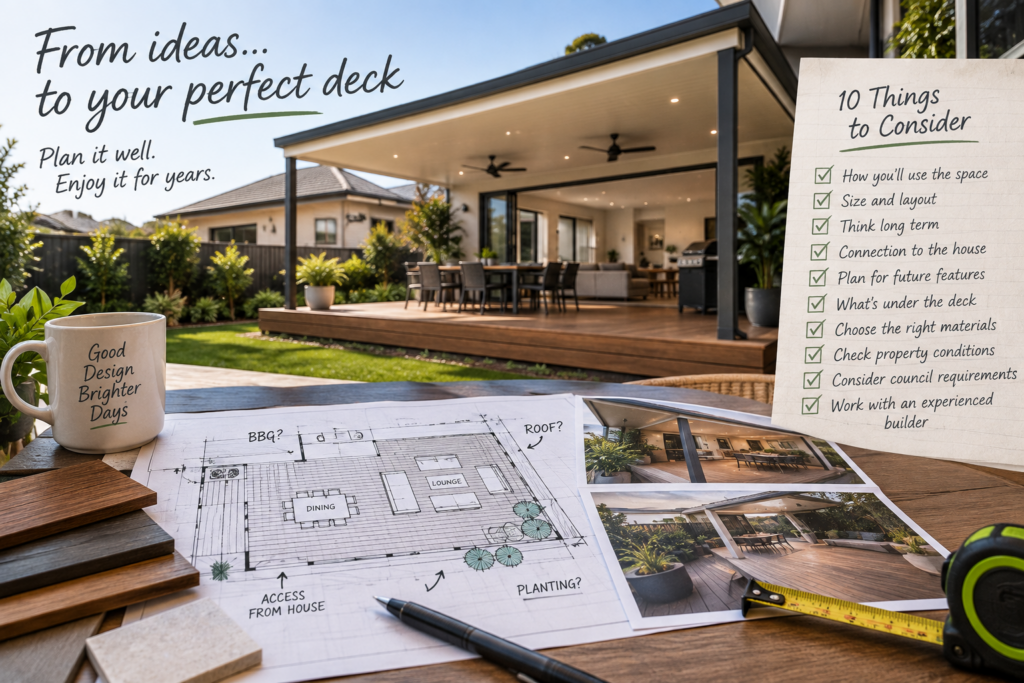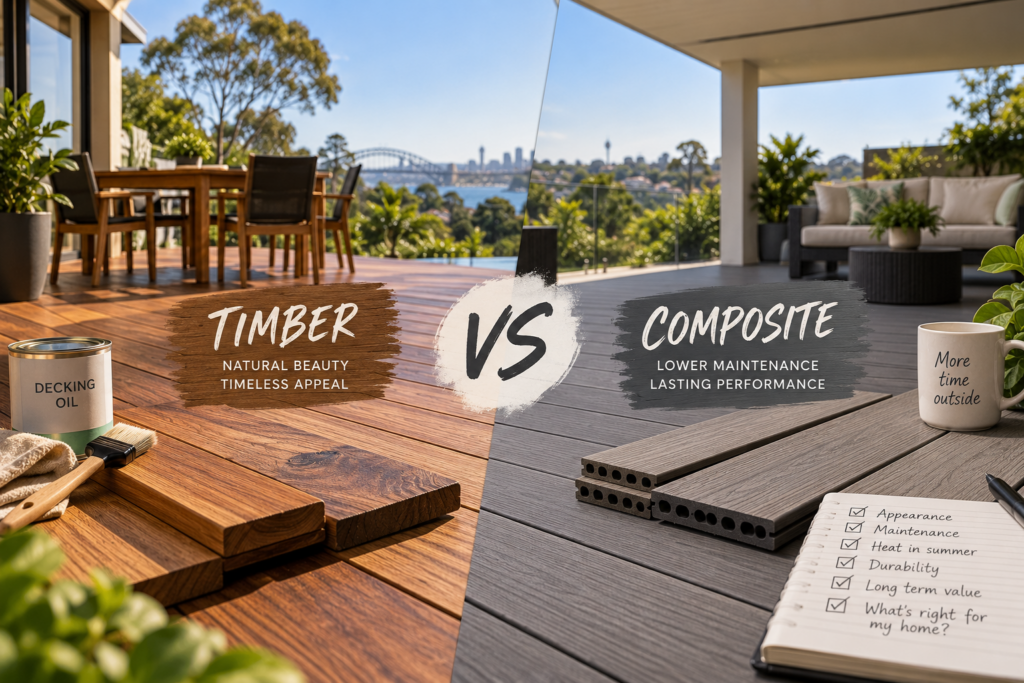
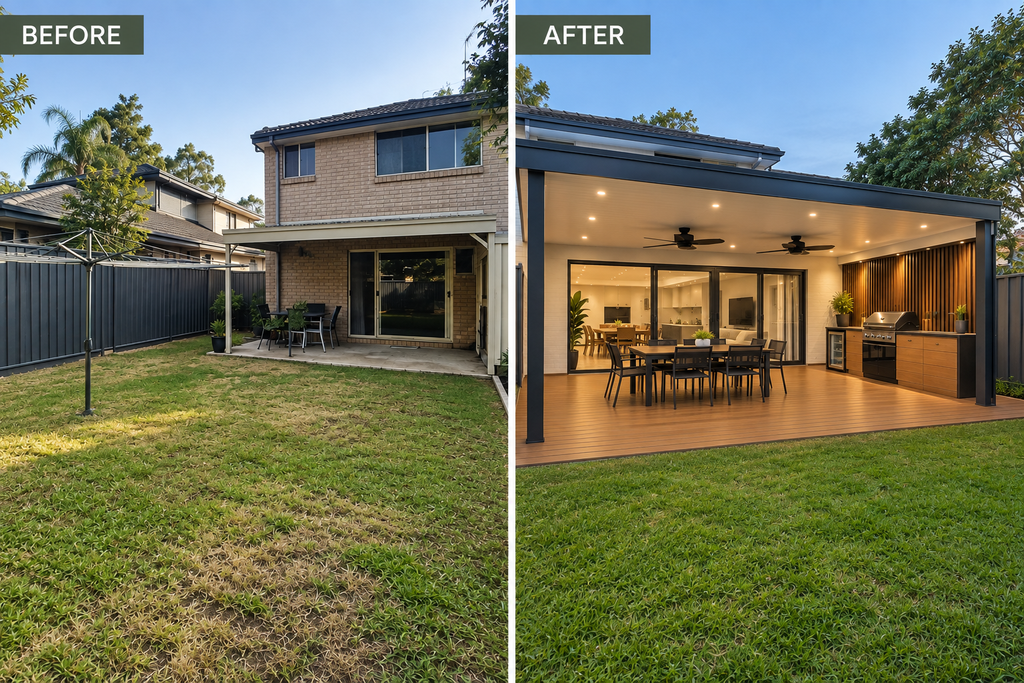
For many Sydney homes, the backyard is one of the largest spaces on the property—but often one of the least used.
There might be lawn, a clothesline and somewhere for the kids to kick a ball. Or perhaps there’s an existing deck or paved area that’s simply too exposed to the sun and rain to be comfortable for much of the year.
Creating a better outdoor area isn’t necessarily about adding more features. It starts by asking a much more important question:
How do you actually want to live outside?
Start With How You’ll Use the Space
It’s easy to begin with a shopping list: a deck, patio roof, outdoor kitchen, fireplace and some new furniture.
But that’s working backwards.
Instead, think about what you want to do outside. Do you regularly have family over for dinner? Cook on the BBQ every weekend? Want somewhere quiet to have a coffee? Need room for large family celebrations? Or simply want another comfortable everyday living area?
The answers should determine what gets built.
If you rarely entertain, for example, spending heavily on a large outdoor kitchen may not make sense. That money might be far better spent creating a larger covered area, improving access from the house or choosing better materials.
Build for the way you live, rather than adding features simply because they’re popular.
Make the Outdoor Area Part of the House
One reason outdoor spaces don’t get used is that they’re disconnected from the home.
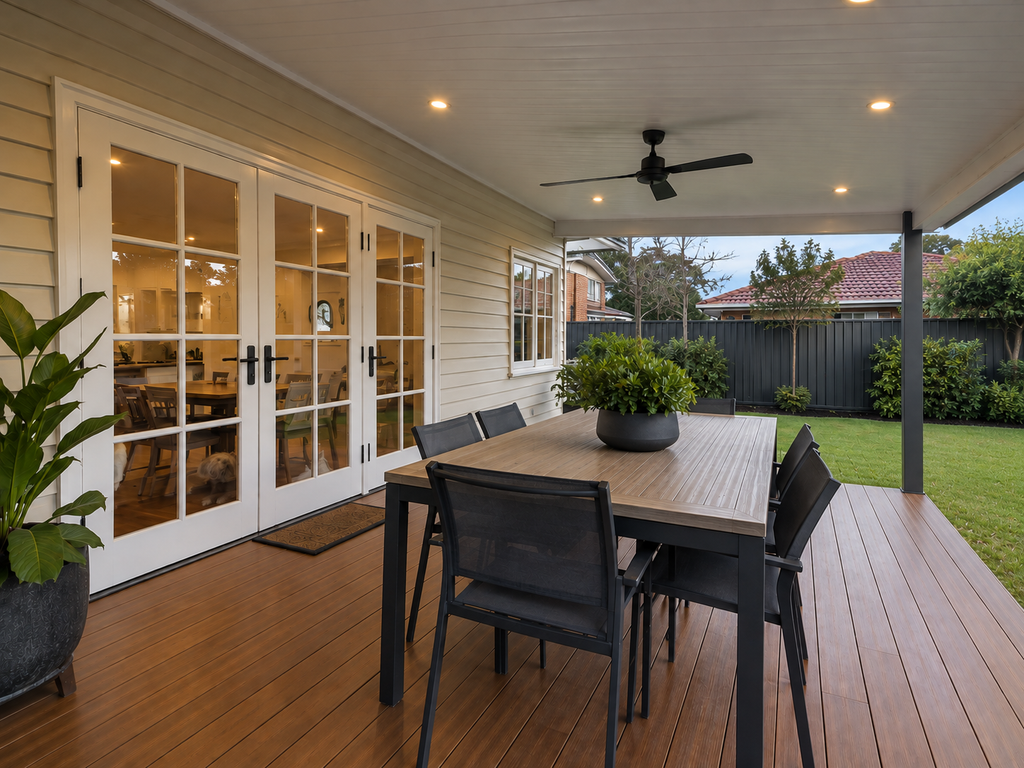
Imagine having to carry dinner through a narrow laundry door every time you want to eat outside. Compare that with opening a wide set of stacking doors directly from the kitchen or living room onto the entertaining area.
Where the existing house and project allow it, sliding doors, stacking doors, French doors or even a servery window can strengthen that indoor-outdoor connection.
The deck level and layout also matter. Creating a practical transition between inside and outside can make the outdoor area feel much more like another living space rather than something sitting separately in the backyard.
Give Yourself Protection From Sydney’s Weather
n uncovered deck can look fantastic on a mild afternoon. The problem comes when it’s 30-plus degrees in summer or raining when you’ve planned a family barbecue.
Sydney receives rainfall throughout the year; Bureau of Meteorology climate averages show roughly 1,044 mm annually, rather than a climate where rain is confined to one season.
A well-designed roof can therefore make a significant difference to how often an outdoor area gets used.
We often use insulated patio roofing for this reason. Rather than being a single sheet of roofing material, insulated panels incorporate an insulating core. Manufacturers such as Versiclad publish thermal ratings of up to RT3.8 for some current patio-roof systems and state that the insulated construction reduces summer heat transfer. Versiclad also identifies reduced noise from heavy rain as a benefit of its insulated roof panels.
That doesn’t turn an outdoor area into an air-conditioned room. It does, however, provide shade, weather protection and improved thermal performance compared with an uninsulated roof system.
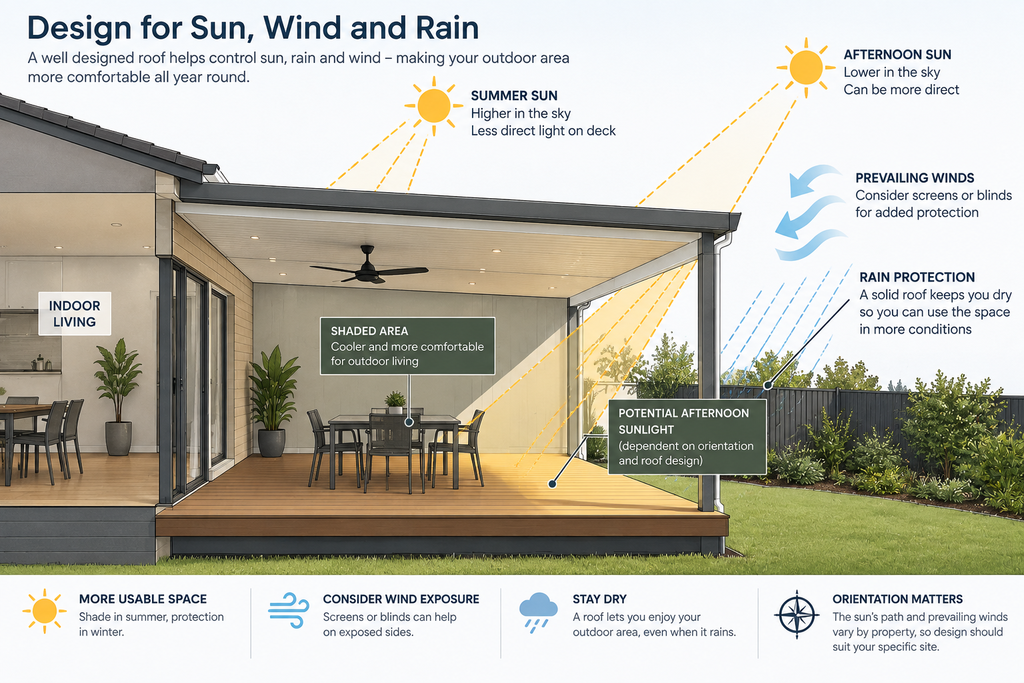
Design for Sun, Rain and Wind
Putting a roof over a deck isn’t the end of the weather conversation.
The orientation of the house matters. So does where afternoon sun enters, which direction wind-driven rain tends to reach the area from and how exposed the property is.
That’s why we look at the individual backyard rather than applying the same design to every home.
Outdoor blinds or screens can sometimes help protect exposed sides of an entertaining area. Ceiling fans can improve air movement during warmer weather. Heating can make an outdoor area more comfortable during cooler periods.
But these features need to suit the particular structure and installation. Electrical equipment, heaters, blinds and other accessories should be selected and installed for their intended outdoor application.
Don’t Forget How People Move Through the Space
Just as with a deck, an outdoor entertaining area needs enough room after the furniture arrives.
A large table with chairs pulled out takes considerably more room than the table itself. An outdoor kitchen needs working space in front of it. People still need to move between the house, BBQ, table and backyard while somebody else is cooking or sitting down.
This is one of the reasons we discuss furniture and entertaining with clients during the design stage.
The dimensions of the structure are only part of the design. The usable space between everything is what determines whether it feels comfortable.
Think Beyond How Your Family Lives Today
This is one of the most important considerations when investing in an outdoor area.
Don’t design only for the next couple of years.
Think about 10, 20 or even 30 years from now.
Children grow up and leave home. Families expand. Grandchildren arrive. The area where young children once played might eventually become where everyone gathers for Christmas lunch or a milestone birthday.
Your needs will change, but a well-designed outdoor area can adapt with them.
That doesn’t mean trying to predict every possible future use. It means thinking about flexibility, adequate space, sensible access and materials appropriate for the life you expect from the project.
Sometimes a Simple Transformation Is Enough
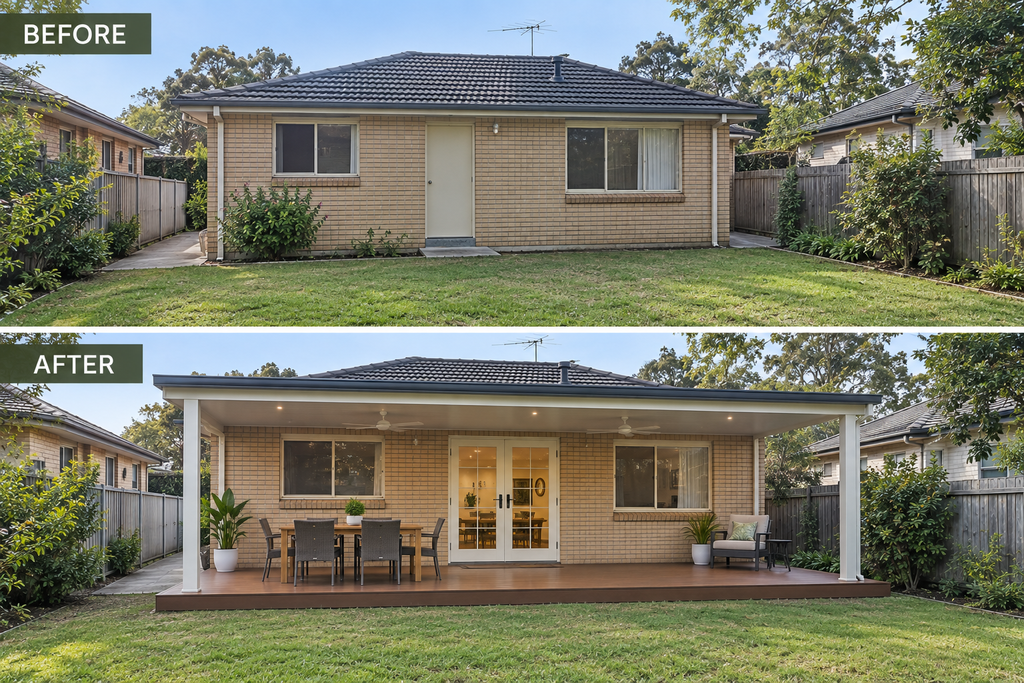
One Proline project demonstrates this well.
The clients had a relatively small home and an underused backyard that slopped slightly away from the house. They wanted somewhere they could entertain, cook a barbecue and use as an everyday extension of the home.
Rather than filling the backyard with features, we concentrated on the fundamentals.
We constructed a deck at the house floor level, added an insulated roof, installed a ceiling fan and lighting, and improved the connection to the house with French doors.
The result wasn’t simply somewhere to hold a party.
It became useful for everyday life—moving between the house and backyard, sitting outside, cooking and entertaining when friends or family visited.
Spend Money Where It Will Make the Biggest Difference
More isn’t automatically better.
An outdoor kitchen can be fantastic for a family that regularly cooks and entertains outside. A fireplace can become a focal point for winter gatherings. Blinds, fans, heating and lighting can all make an outdoor area more comfortable.
But they shouldn’t be included simply to create an impressive space.
Sometimes the better investment is more usable floor area, better weather protection or a stronger connection to the house.
Work out what matters most to your family first. Then design the structures and features around it.
Create an Outdoor Area for the Way You Live
A successful outdoor entertaining area shouldn’t just photograph well on the day it’s finished.
It should be somewhere you naturally want to use.
That means considering how your family entertains, how people move through the space, how the area connects with the house, how Sydney’s weather affects it and how your needs may change over time.
If you’re considering transforming an underused backyard in Greater Sydney, Proline Outdoor & Decking can help you design and build an outdoor area around how you actually want to use it—both now and into the future.
Disclaimer: The information in this article is provided for general information only and should not be considered professional, legal, planning, engineering or building advice. Requirements can vary depending on your property, location and individual project. Always confirm the requirements that apply to your circumstances with the relevant authority or appropriately qualified professional.